caribbean reef octopus
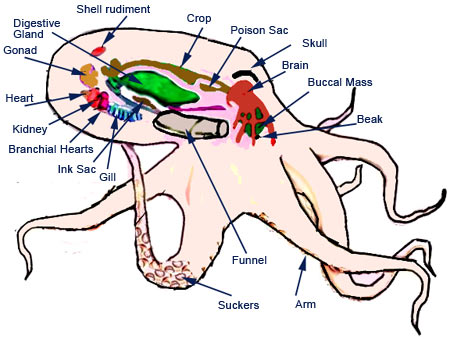
Octopuses have complex digestive systems. They have six major components to their digestive systems: the stomach, the visceral mass, the caecum, the crop, the liver, rectum, and ink sac. The stomach is found roughly in the midpoint of the visceral mass, which is a part of the animal that contains many vital organs.
From there, after the stomach, the food moves into the caecum for digestion. The caecum, a long, white organ, is found next to the ovary of the octopus. In older octopuses, more priority is given to reproduction such that the stomach and caecum often shrivel up during the later life stages.
Finally, food goes to the liver (or digestive gland), for absorption. Solid waste is passed out of the rectum. Beside the rectum is the ink sac, which allows an octopus to rapidly discharge black ink into the mantle cavity.
From there, after the stomach, the food moves into the caecum for digestion. The caecum, a long, white organ, is found next to the ovary of the octopus. In older octopuses, more priority is given to reproduction such that the stomach and caecum often shrivel up during the later life stages.
Finally, food goes to the liver (or digestive gland), for absorption. Solid waste is passed out of the rectum. Beside the rectum is the ink sac, which allows an octopus to rapidly discharge black ink into the mantle cavity.